
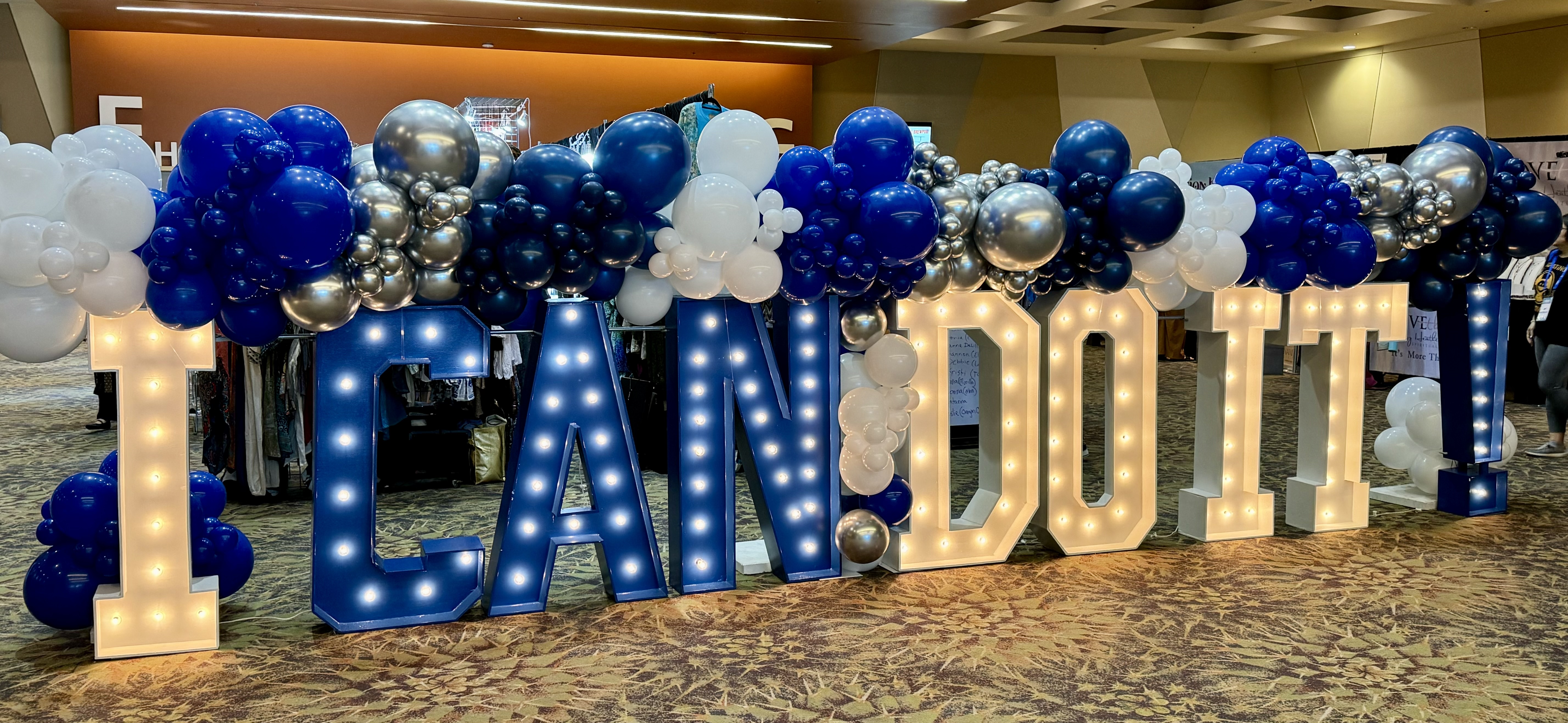
I Can Do It! Phoenix 2024 Recap: Jim Kwik, Gabby Bernstein, and the Power of Personal Transformation
Hay House's I Can Do It! conference has been gathering people committed to growth since 2004. The Phoenix 2024 edition was no exception — a weekend-long immersion with some of the most respected voices in personal development, emotional healing, and spiritual psychology. What makes this conference distinct from many wellness events is the depth of the content: these aren't motivational pep talks. They're practical frameworks backed by psychology, neuroscience, and lived experience.
Jim Kwik: Unlocking Your Memory and Mind
Jim Kwik opened with his signature high-energy presence and a framework that has helped millions of people improve their memory and learning capacity. His core teaching revolves around three M's:
Mindset — Your beliefs about your own capabilities set the ceiling on what you can achieve. Jim has shared openly about his own childhood learning struggles and how shifting his mindset was the prerequisite for everything else. If you believe your memory is "just bad," you won't invest in improving it.
Motivation — Purpose-driven learning sticks. Jim argues that the reason most people forget what they read or hear is that they haven't connected the information to a meaningful "why." When you know why something matters to you, retention increases dramatically.
Methods — Once mindset and motivation are in place, specific techniques — visualization, spaced repetition, the primacy/recency effect, active recall — can be layered in to dramatically accelerate learning and retention.
Jim's message is fundamentally empowering: your brain is not fixed. It's trainable at any age, and with the right methods, anyone can develop a sharper, faster mind.
Gabby Bernstein: Healing Trauma Through Presence
Gabby Bernstein brought a different kind of depth to the stage, drawing from her book Happy Days and her extensive work with trauma recovery. Her central insight: trauma is not the event — it's the inability to be present. When something painful happens and we don't have the tools to process it, the nervous system freezes that moment in time. We carry it forward, and it shows up as reactivity, self-sabotage, relationship patterns, and chronic stress.
Gabby's approach weaves together internal family systems (IFS), EMDR principles, and spiritual practice into an accessible framework for everyday people. Her vulnerability about her own healing journey — including addiction recovery and childhood trauma — made the content land not as theory but as lived possibility.
The takeaway that resonated most: healing doesn't require reliving the past in painful detail. It requires learning to feel safe in the present.
The Enneagram: A Map for Self-Understanding
Dr. Robert Holden and Dr. Deborah Egerton led an immersive session on the Enneagram — the personality typing system that goes far deeper than most personality assessments. Unlike systems that categorize behavior, the Enneagram maps the core fears, desires, and defense mechanisms that drive behavior. Understanding your type isn't about putting yourself in a box; it's about recognizing the automatic patterns that run below conscious awareness.
Dr. Holden's background in positive psychology and Dr. Egerton's expertise in the Enneagram created a rich dynamic — the session balanced theory with live demonstration, making it both intellectually engaging and personally illuminating.
Kimberly Snyder: The Four Cornerstones of True Beauty
Kimberly Snyder presented her framework for holistic health and beauty — not as aesthetics, but as an expression of alignment between body, mind, and spirit. Her four cornerstones provide a complete picture of what it means to genuinely thrive:
Food — Clean, plant-forward nutrition that supports the gut microbiome, reduces inflammation, and provides the raw materials for cellular repair.
Body — Movement, rest, and physical practices that restore nervous system balance and support lymphatic and metabolic function.
Emotional Wellbeing — Addressing the emotional patterns and unprocessed experiences that express themselves as physical symptoms and low-grade chronic stress.
Spiritual Growth — Connection to something larger than the individual self, whether through meditation, nature, community, or devotional practice.
Kimberly's work is a reminder that beauty and health aren't separate pursuits — they're the same thing, viewed from different angles.
Why I Can Do It! Matters
What Hay House has built with I Can Do It! is a gathering space for people at every stage of the personal growth journey — whether you're just beginning to question your default programming or you're a seasoned practitioner deepening your toolkit. The quality of speakers and the intention of the audience creates an environment where transformation feels both possible and supported.
If you're looking for upcoming personal development and wellness conferences, explore the Health Conference Directory to find your next event.